Quick Workday Breakfasts
Published February 2026 - Educational content
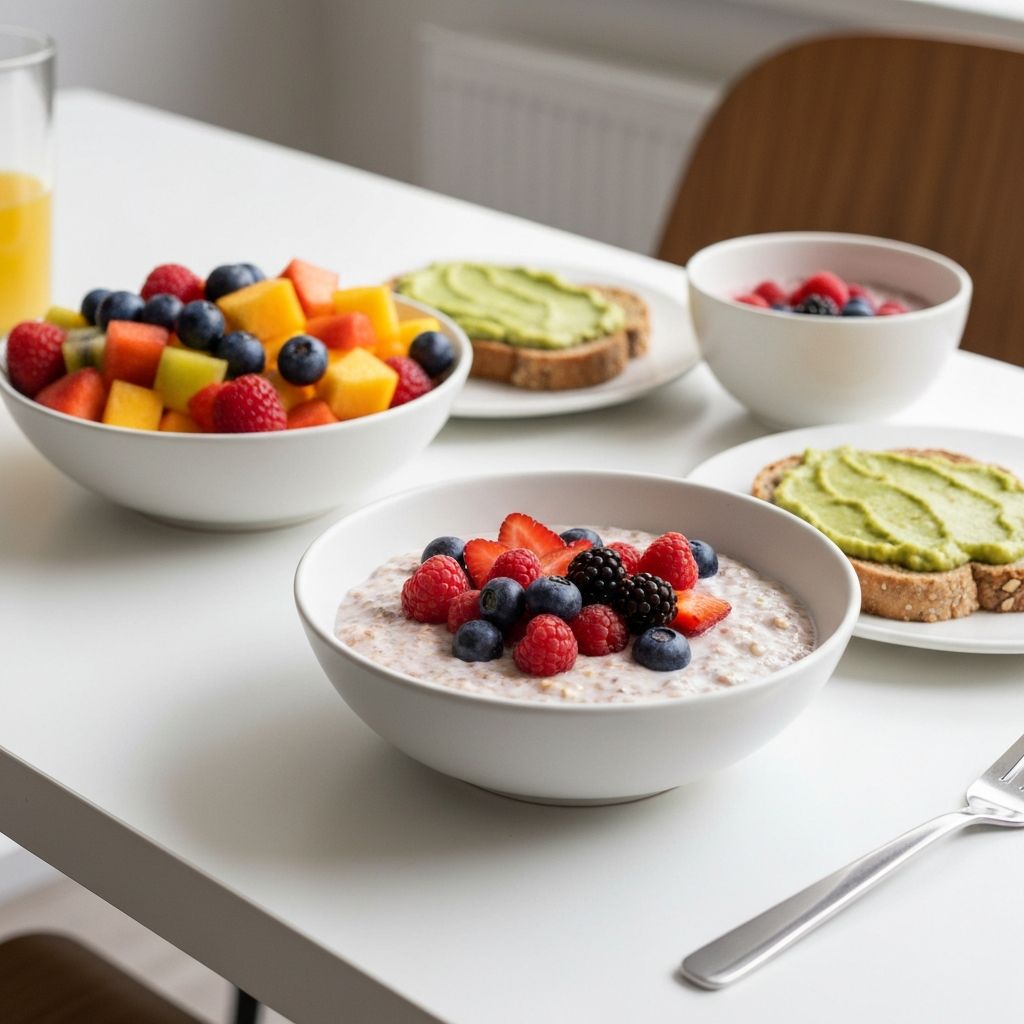
Understanding Morning Meal Concepts
The morning meal represents an opportunity to consume nutrients after the overnight period. Many people seek breakfast options that balance nutritional variety with time efficiency during busy workdays. This article explores common approaches and concepts related to quick breakfast preparation.
Common Quick Breakfast Elements
Typical quick breakfast options often incorporate combinations of the following food groups:
Whole grains such as oats, whole grain bread, or whole grain cereals provide complex carbohydrates. Protein sources including eggs, yogurt, or nut butters contribute to the protein content of morning meals. Fruits add natural sweetness, vitamins, and fiber to breakfast preparations. Vegetables like tomatoes, spinach, or peppers can be included in various breakfast formats.
Overnight Preparation Concepts
Some breakfast options can be prepared the evening before to save morning time. Overnight oats represent a common example where oats are combined with liquid and left to soften overnight in the refrigerator. Hard-boiled eggs can be cooked in advance and stored for several days. Pre-cut fruits and vegetables can be prepared ahead and stored in containers.
These advance preparation methods are strategies some people use to reduce morning preparation time. Whether these approaches suit any particular individual depends on their schedule, preferences, and circumstances.
Five-Minute Breakfast Ideas
Various breakfast options can be assembled or prepared in approximately five minutes:
Whole grain toast with nut butter and sliced banana represents a combination of carbohydrates, protein, and fruit. Greek yogurt topped with berries and a sprinkle of granola combines dairy, fruit, and whole grains. Scrambled eggs with whole grain toast can be prepared quickly using basic cooking skills. Smoothies blending fruits, vegetables, and protein sources offer portable nutrition.
These examples describe common breakfast concepts rather than specific recommendations for any individual.
Portable Breakfast Considerations
For those who eat breakfast away from home, certain options are more portable than others. Whole pieces of fruit like apples or bananas require no preparation or containers. Overnight oats can be transported in sealed containers. Hard-boiled eggs travel well when kept cool. Whole grain muffins or bread can be wrapped and carried easily.
The choice of portable versus sit-down breakfast depends entirely on individual circumstances and preferences.
Ingredient Combinations
Common breakfast ingredient pairings include carbohydrate sources combined with protein sources. Examples of this pattern include oatmeal with nuts, toast with eggs, yogurt with granola, or smoothies containing both fruit and protein powder or nut butter.
Adding fruits or vegetables to breakfast preparations increases the variety of nutrients consumed. Berries pair well with yogurt or oatmeal. Spinach can be added to egg preparations. Bananas complement many breakfast options from toast to smoothies.
Time-Saving Preparation Methods
Several preparation strategies can reduce morning breakfast time. Batch cooking items like hard-boiled eggs or breakfast muffins on weekends provides ready-made options throughout the week. Organizing breakfast ingredients in accessible locations reduces decision-making time. Using simple cooking methods like microwaving eggs or toasting bread requires minimal skill and time.
Different people find different strategies helpful depending on their kitchen setup, schedule, and comfort with various preparation methods.
Variety in Morning Meals
Rotating between different breakfast options throughout the week can provide nutritional variety and prevent monotony. Some people alternate between sweet options like fruit and yogurt and savory options like eggs and vegetables. Others vary their grain sources between oats, toast, and cereals across different days.
The degree of variety any individual seeks in their breakfast routine is a personal preference.
Educational Information and Context
This article provides general educational information about breakfast concepts and is not personalized advice for any individual. Nutritional needs vary widely between people based on numerous factors including age, activity level, health status, and personal preferences.
The breakfast ideas described here represent common approaches people take but should not be interpreted as recommendations specific to your circumstances. Individual dietary decisions are personal and where appropriate may involve consultation with qualified professionals.